

Why CPAP Insights Exists
Most CPAP machines collect detailed data every night—how many apneas you had, how your pressure is working, whether your mask sealed properly. But that data lives on an SD card inside your machine, and your machine's built-in screen shows almost nothing useful.
Your sleep doctor gets a report after your appointment, but you're stuck waiting weeks or months to know if your therapy is working. I built CPAP Insights because after years of struggling with my own CPAP therapy, I realized I had zero visibility into what was actually happening night-to-night.
You shouldn't need a sleep medicine degree to understand your own treatment. CPAP Insights turns that locked-away data into clear, actionable information you can use right now—and share confidently with your sleep doctor.
What You Can Do With Your Data
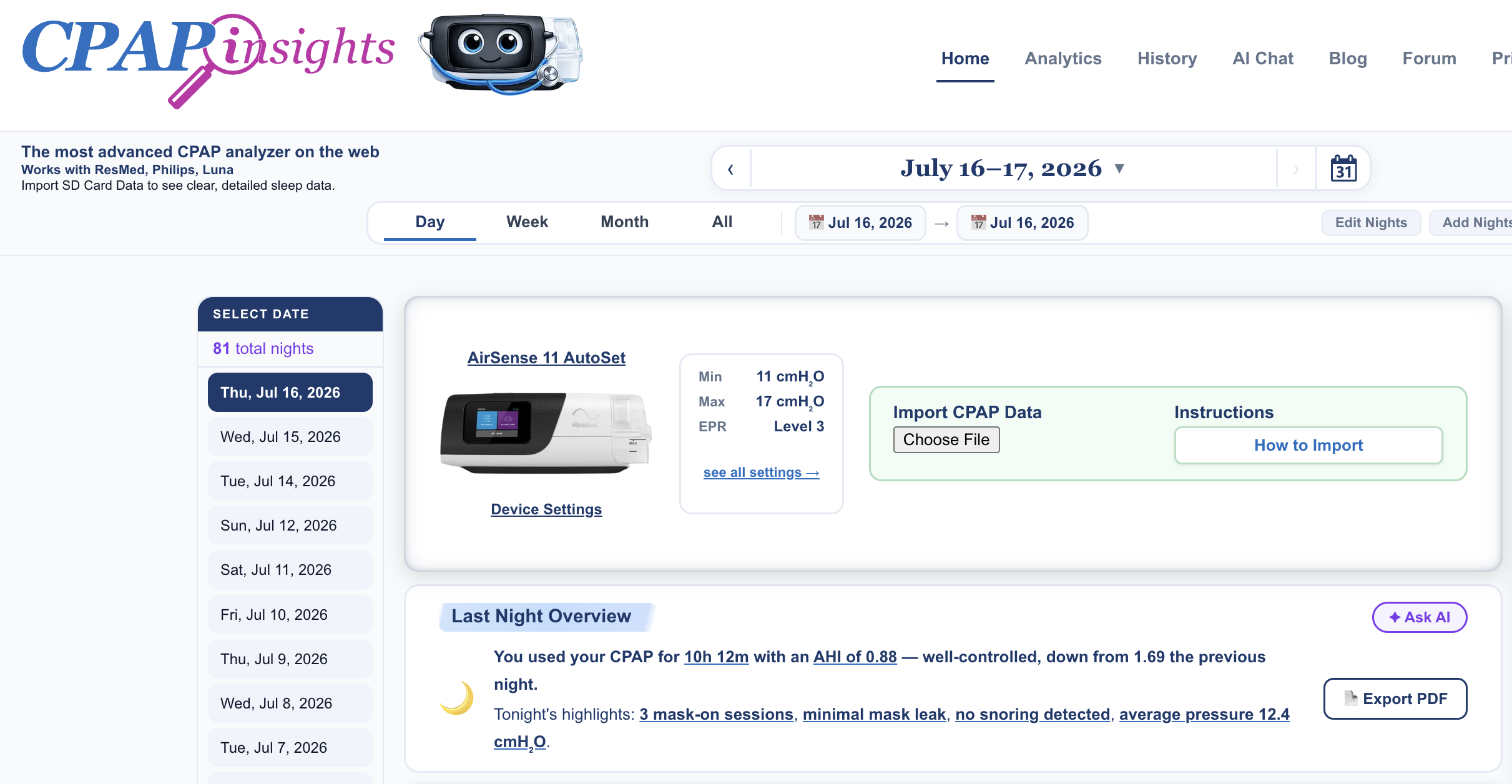
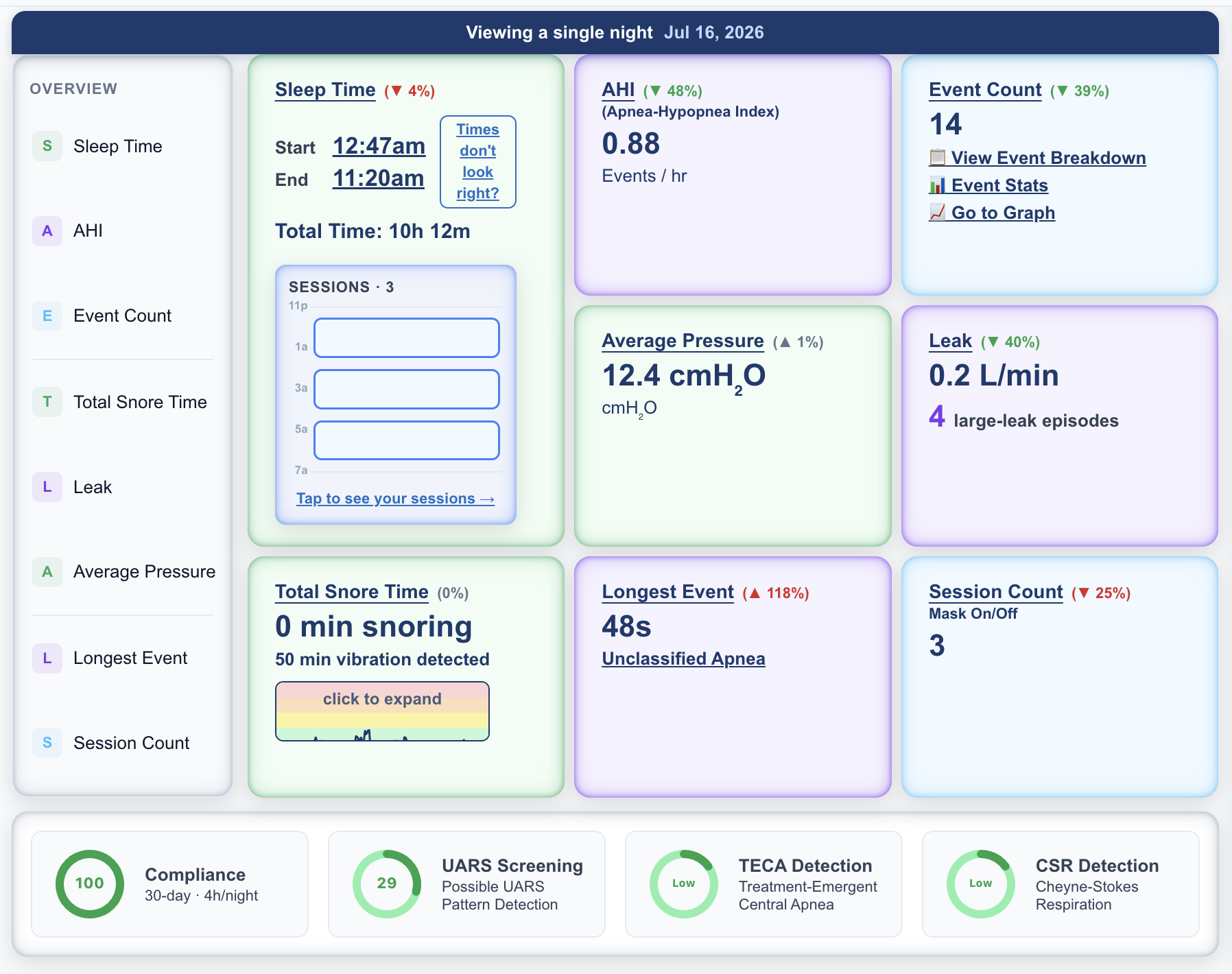
Once you import your SD card, CPAP Insights automatically reads the raw therapy files from ResMed, Philips, or Luna machines. Here's what becomes visible:
- Your AHI (Apnea-Hypopnea Index) — the gold-standard measure of sleep apnea severity. Lower is better. The AASM defines an AHI below 5 as normal.
- Pressure effectiveness — is your set pressure actually stopping your events, or do you need an adjustment?
- Mask fit quality — how many nights had leaks that hurt your therapy?
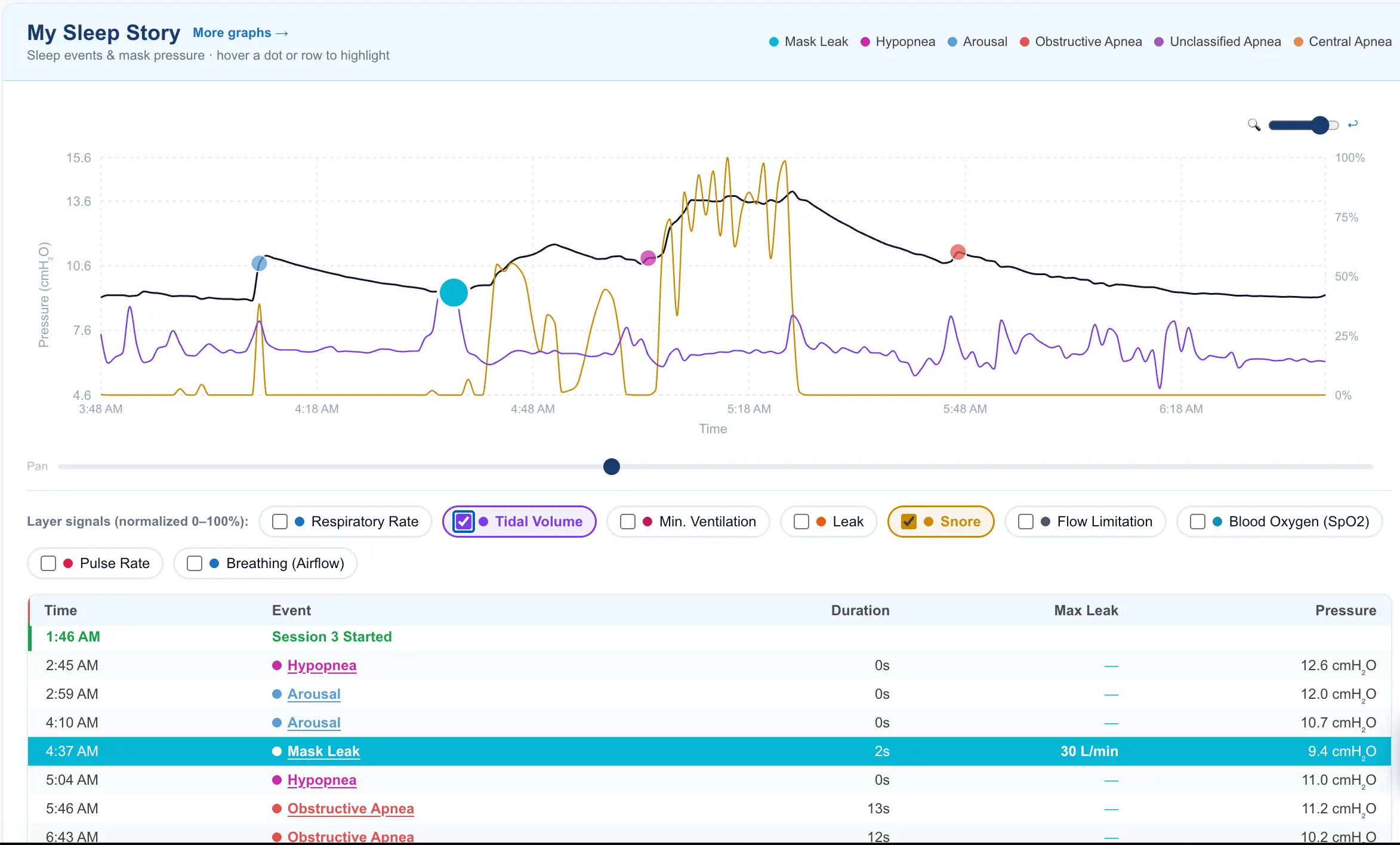
- Trends over time — Build a Graph to spot patterns: Are you worse on certain days? Did that pressure increase help?
- Flow limitation signals — early signs your body is struggling to breathe, even if you haven't had a full apnea yet.
Instead of scattered numbers, you get a narrative of your therapy. That's the starting point for a real conversation with your doctor.
Tools Built Into the Platform
CPAP Insights includes several features designed to help you understand your data faster:
Build a Graph: Upload multiple SD card exports and visualize your AHI, pressure, or mask seal over weeks or months. See whether you're improving, and when.
UARS Screening: Some people have Upper Airway Resistance Syndrome (UARS)—a condition where your airway narrows but doesn't fully collapse. Traditional AHI scoring misses it. This screening tool flags flow limitation data that might indicate UARS, so you can discuss it with your doctor.
Flow Limitation Analysis: Detects when your airway is partially blocked, even if it didn't trigger a counted event. This is valuable for fine-tuning pressure or understanding why you still feel tired.
Sleep Doc AI: Get instant feedback on your settings. The AI compares your current pressure to your event data and suggests whether a small adjustment might help—though any actual change always goes through your sleep doctor.
None of these replace a doctor's judgment. They just make your data readable.
Privacy and How It Works
Your data never leaves your browser. When you import an SD card file, CPAP Insights reads it locally on your device—we don't store, transmit, or log any of your therapy information. If you want to email a graph to your doctor or save it, that's your choice.
The platform works with:
- ResMed AirSense and AirCurve machines (most common in the US)
- Philips DreamStation series
- Luna machines
Your machine's SD card contains encrypted therapy files. CPAP Insights decrypts and interprets them so you can actually read what's inside. It's free—no ads, no premium tier, no data selling.
How to Get Started
If you own or are starting CPAP therapy, here's the path:
1. Find your SD card. It's usually inside the machine, behind a panel (your manual shows where).
2. Remove it and insert into a card reader (USB adapters are $5–10).
3. Go to cpapinsights.com and use the import tool.
4. Upload the SD card files. The app reads them instantly.
5. Explore your data. Look at your AHI, pressure effectiveness, and mask seal. Build graphs if you have multiple exports.
6. Discuss findings with your doctor. Bring screenshots or ask about any concerning patterns.
Most people check their data weekly or monthly. Some import after every doctor adjustment to see if the change helped. There's no wrong cadence—this is your therapy, and understanding it is part of taking control of your sleep health.
If you're new to CPAP, start by just looking at your AHI. If your doctor aimed for an AHI below 5, you'll know right away if you're hitting that target—without waiting weeks.
Why This Matters
Sleep apnea is serious. Untreated, it raises your risk of heart attack, stroke, and hypertension. But CPAP therapy works—if it's set right and you're using it.
The problem is the gap: your machine knows whether therapy is working, but you don't, not until your next appointment. That gap is where compliance fails. People feel worse (or think they're not improving) and quit, when really they just needed a small pressure tweak.
CPAP Insights closes that gap. You get real-time visibility into your therapy. You can prove to yourself it's working. You can catch problems early. You can partner with your doctor from an informed position instead of guessing.
Your sleep, and your health, depend on good therapy. This tool exists so you can actually see whether you're getting it.