


The CPAP Paradox: Treatment Shouldn't Feel This Hard
One of the most frustrating experiences in sleep medicine is starting CPAP, committing to it night after night, and still waking up tired. Many people assume it means the therapy isn't working, or that they have a different sleep disorder. But in most cases, CPAP is working—something else needs adjustment.
First, remember: CPAP takes time. Your body has been sleep-deprived, sometimes for years. Neural recovery alone can take weeks or months. But if you've been on therapy for 4–6 weeks and you're still severely fatigued, it's worth investigating.
The good news: the cause is usually one of a handful of issues, and many are discoverable by looking at your therapy data. If you haven't already, start [importing your SD card data](https://cpapinsights.com) to see what's actually happening during your sleep.
Five Reasons You Might Still Be Tired
1. Your pressure isn't high enough (or is too high)
The most common culprit. If your AHI isn't controlled—you're still having apneas—you're still fragmented. Conversely, pressure that's too high causes arousals and micro-awakenings, leaving you exhausted despite treating events.
2. You have residual flow limitations
Some people have events their machine counts as "normal breathing," but their airway is still narrowing. This is especially common in UARS (Upper Airway Resistance Syndrome) and can leave you tired despite a "good" AHI.
3. Leak or poor fit
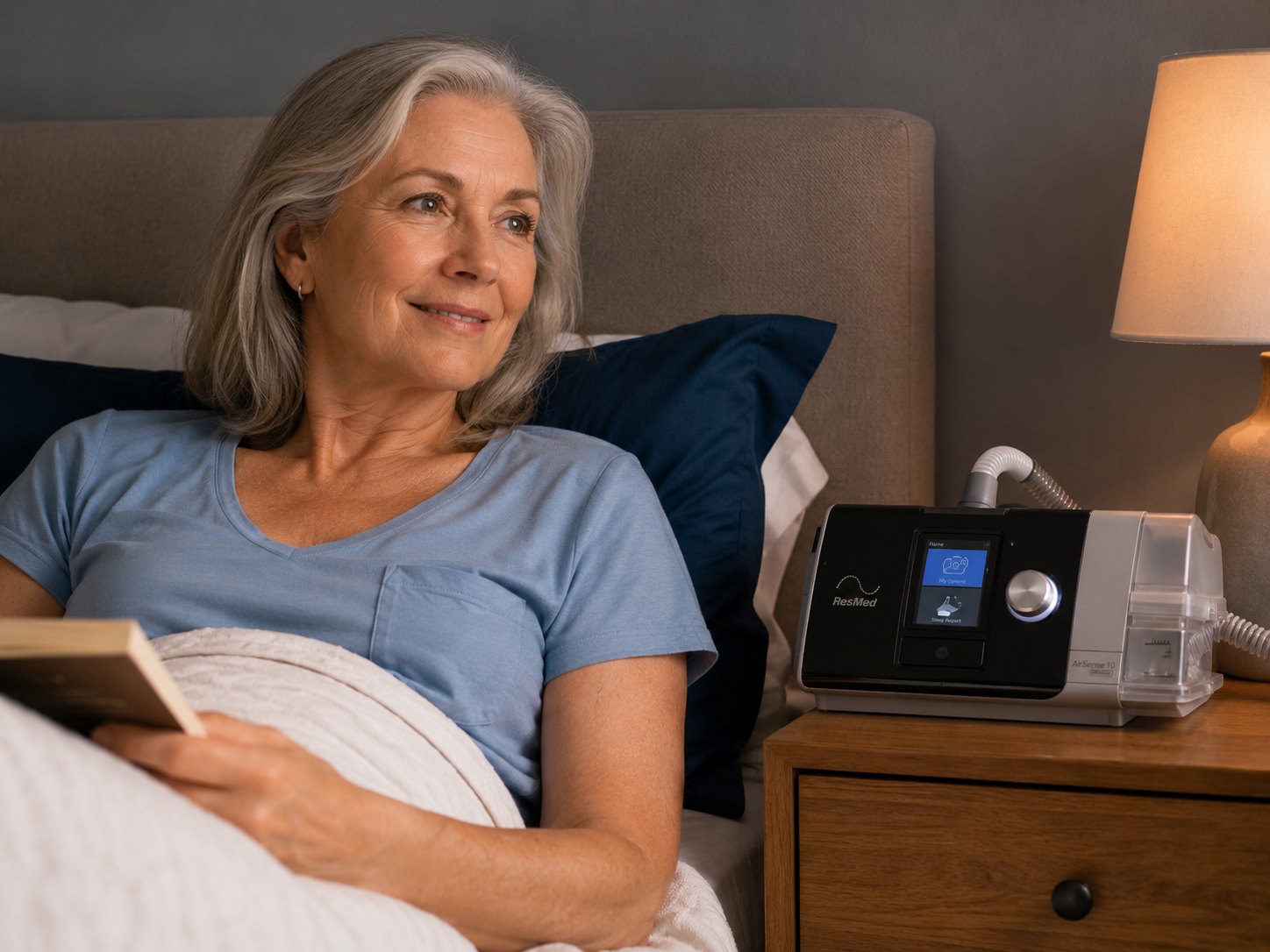
A leaking mask wastes pressure, reduces effectiveness, and disrupts sleep architecture. You might not notice consciously—you just feel unrested.
4. Central apneas from pressure changes
Raising pressure too quickly, or switching to BiPAP without proper settings, can trigger central events. These disrupt the deepest, most restorative sleep.
5. An unrelated sleep issue
Insomnia, periodic leg movements, or a circadian disorder can coexist with obstructive sleep apnea. Treating one doesn't cure the other.
How to Investigate Your Own Data
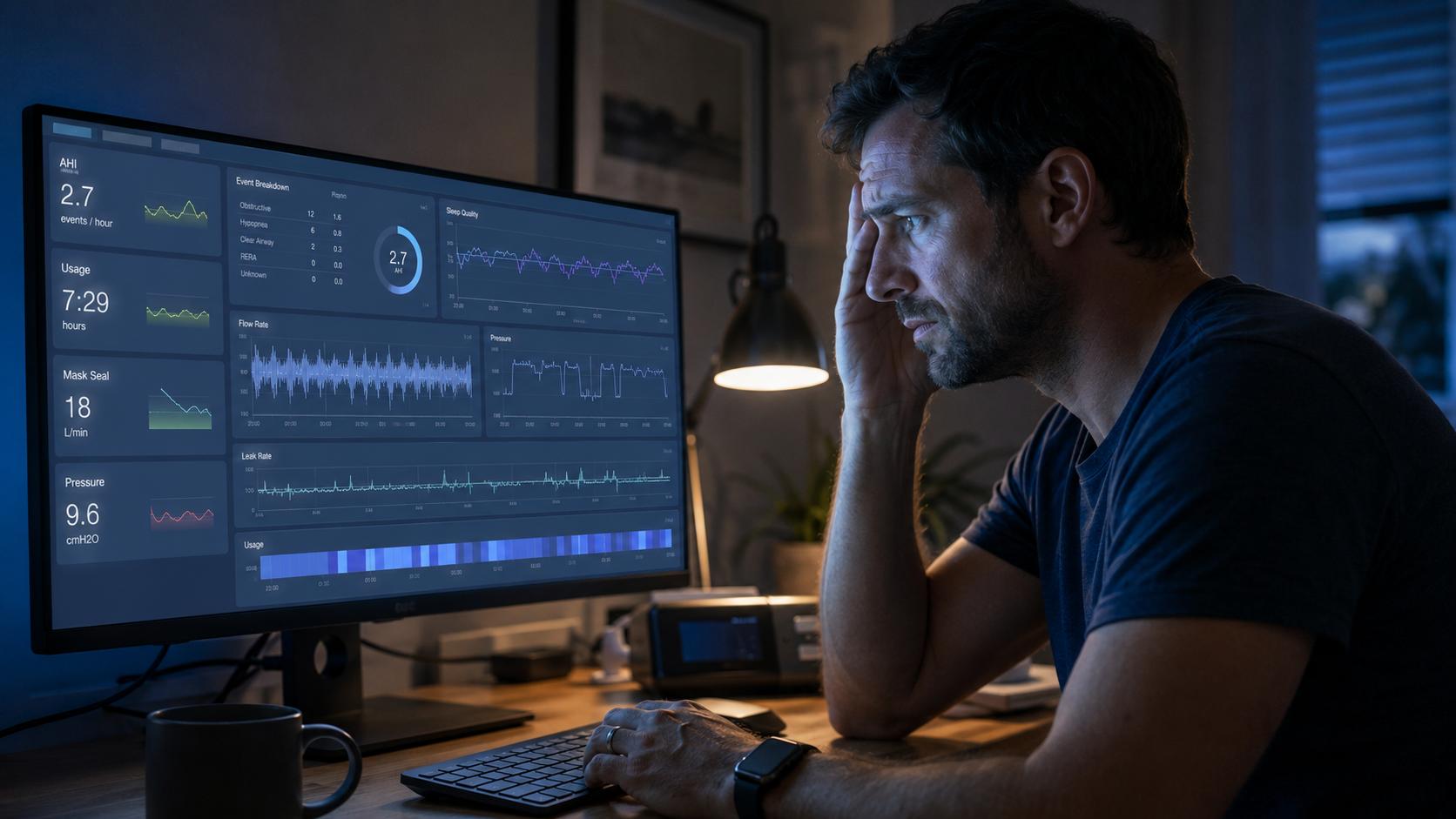
Your CPAP machine records detailed information on your SD card: every apnea, hypopnea, flow limitation, and pressure change. Most of this data is invisible in your standard app report.
Start by checking your AHI trend over time. It should be generally declining or stable under 5. If it's bouncing wildly or creeping up, your pressure needs review.
Next, look at flow limitation events. This metric—tracked by ResMed, Philips, and Luna devices—shows how often your airway is narrowing even if you're not having full apneas. High flow limitation relative to your apnea count might explain persistent fatigue. [CPAP Insights' flow limitation analysis](https://cpapinsights.com) makes this visible in a format you can actually understand and bring to your doctor.
Finally, check your ramp settings and pressure curve. Are you ramping too quickly? Is your EPR (expiratory pressure relief) too aggressive? Small tweaks here often help.
Then bring this data to your sleep doctor. Don't guess—show them what the machine is recording.
When to Ask Your Sleep Doctor for Help
If after 4–6 weeks you're still exhausted, schedule a follow-up appointment. Come prepared:
- Download your therapy data from your machine's app or SD card. [Import it into CPAP Insights](https://cpapinsights.com) to spot trends your standard report might miss.
- Bring a specific complaint: "I'm having 15 events an hour still" or "I wake up gasping" is more useful than "I'm tired."
- Note any pressure-related side effects: headaches, claustrophobia, dry throat, or feeling like you can't exhale.
- Mention your equipment: machine model, mask type, humidifier settings.
Your doctor may:
- Adjust your pressure settings
- Try a different mask or machine mode (AutoSet vs. fixed pressure, CPAP vs. BiPAP)
- Order a repeat sleep study to confirm current settings are adequate
- Screen for other sleep disorders or comorbidities
- Consider UARS if your AHI is low but you're symptomatic
If you suspect UARS specifically—symptoms worse than your apnea count would suggest—mention it and ask about flow limitation data. [CPAP Insights includes a UARS screening guide](https://cpapinsights.com) to help you recognize the pattern.
The Role of Patience, Compliance, and Honest Troubleshooting
One last thing: being tired on CPAP sometimes just means you need more time. Sleep fragmentation from years of untreated apnea causes a form of "sleep debt" that takes weeks to repay. Your brain needs consistent, stable sleep architecture to fully recover.
But don't confuse patience with passive acceptance. Use your data. Track patterns. Ask questions. If your pressure is actually controlling events, your mask fits well, and you're getting 6+ hours a night, and you're *still* waking up gasping or exhausted after two months, that's not normal—and it's not something you should just live with.
The best CPAP outcomes happen when patients become informed about their therapy. You're not supposed to understand everything about sleep medicine, but you are supposed to understand your own data.
Still unsure what you're looking at? [Build a graph of your own data](https://cpapinsights.com) and share it with your sleep doctor, or bring it to an online sleep community where others can help interpret it. Your fatigue is real, the solution usually is too—you just need to find it.