

What AHI Measures
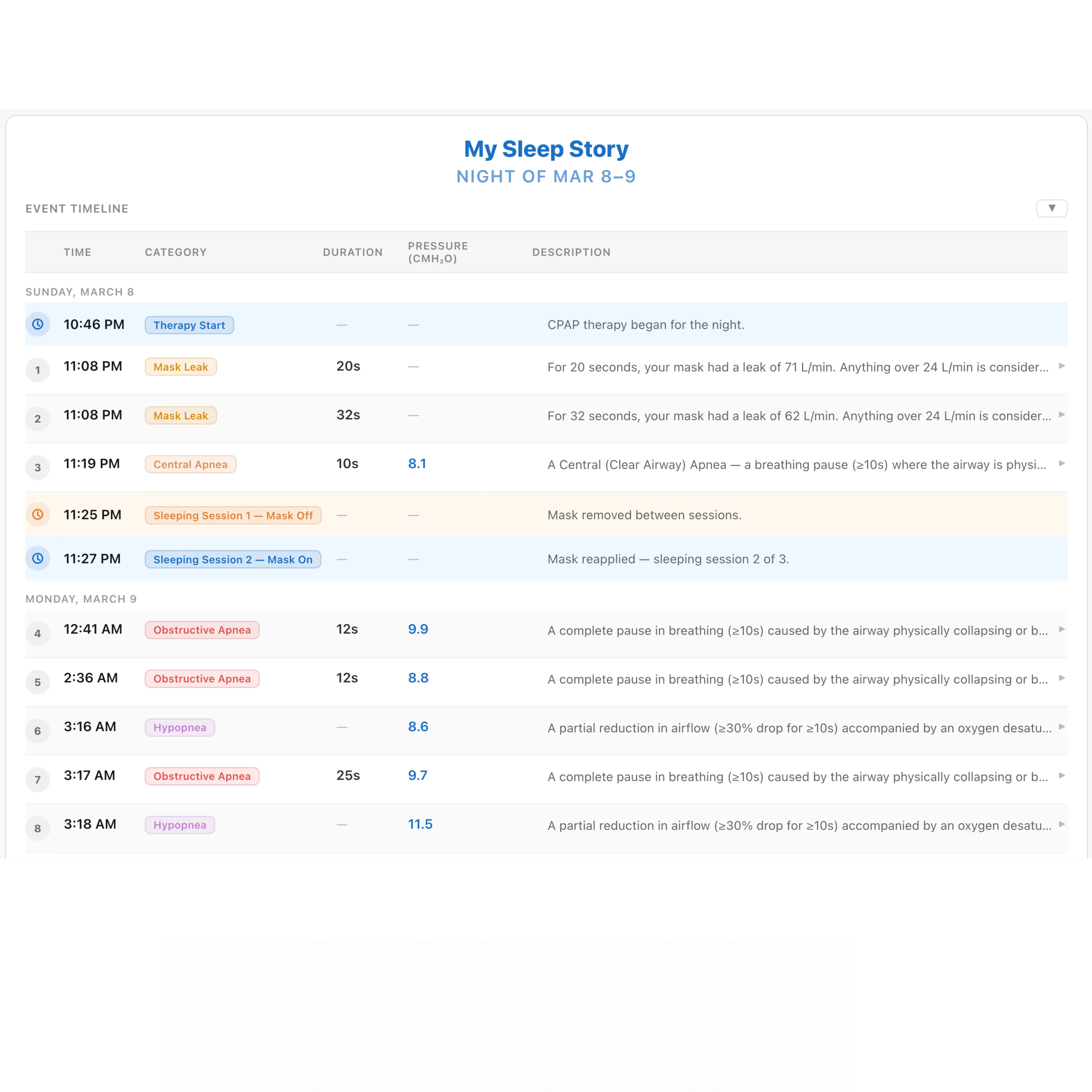
Your AHI (Apnea-Hypopnea Index) counts the average number of apnea and hypopnea events per hour of sleep. It's the single most-used metric in sleep therapy — but it doesn't tell the whole story.
AHI Score Ranges
The American Academy of Sleep Medicine (AASM) classifies AHI scores as follows:
- Under 5 events/hr: Treated / normal range. This is the goal for most CPAP users.
- 5–15 events/hr: Mild sleep apnea. Your therapy may need adjustment.
- 15–30 events/hr: Moderate sleep apnea. Talk to your sleep doctor about pressure changes.
- Over 30 events/hr: Severe. Urgent follow-up recommended.
Why AHI Isn't Everything
AHI only counts events that meet strict scoring criteria. Subtle breathing disruptions — like those seen in UARS (Upper Airway Resistance Syndrome) — can cause arousals and fragmented sleep without registering as scored events. If your AHI looks great but you still feel exhausted, flow limitation patterns and RERA events may tell a different story.
Research published in the journal Sleep has shown that respiratory effort-related arousals (RERAs) can cause the same daytime symptoms as scored apneas, yet they don't appear in your AHI number.
What to Do About Your AHI
Import your SD card data into CPAP Insights and look beyond the AHI. Check your flow limitation patterns, leak rates, and event breakdown for a fuller picture of your sleep quality. Our AI assistant can help interpret patterns specific to your data.