

What Is UARS?
UARS (Upper Airway Resistance Syndrome) is a form of sleep-disordered breathing where your airway partially narrows — not enough to score as an apnea or hypopnea, but enough to cause arousals that fragment your sleep. It was first described by Dr. Christian Guilleminault at Stanford University and is now recognized as a distinct condition on the sleep-disordered breathing spectrum.
Why UARS Is Frequently Missed
Standard sleep studies focus on AHI. If your AHI is under 5, you're often told everything is fine. But UARS patients can have dozens of arousals per night from respiratory effort-related events that fly under the scoring radar.
The AASM's scoring criteria require a measurable drop in airflow or oxygen saturation to count an event. UARS events cause arousals through increasing respiratory effort alone — a signal most home sleep tests can't measure.
Signs of UARS in Your CPAP Data
Look for these patterns when reviewing your nightly data:
- Low AHI but persistent fatigue and unrefreshing sleep
- Sustained flow limitation clusters (3+ consecutive minutes of elevated flow limitation)
- Tidal volume drops during flow limitation with recovery spikes immediately after
- Machine pressure sitting near its minimum setting most of the night
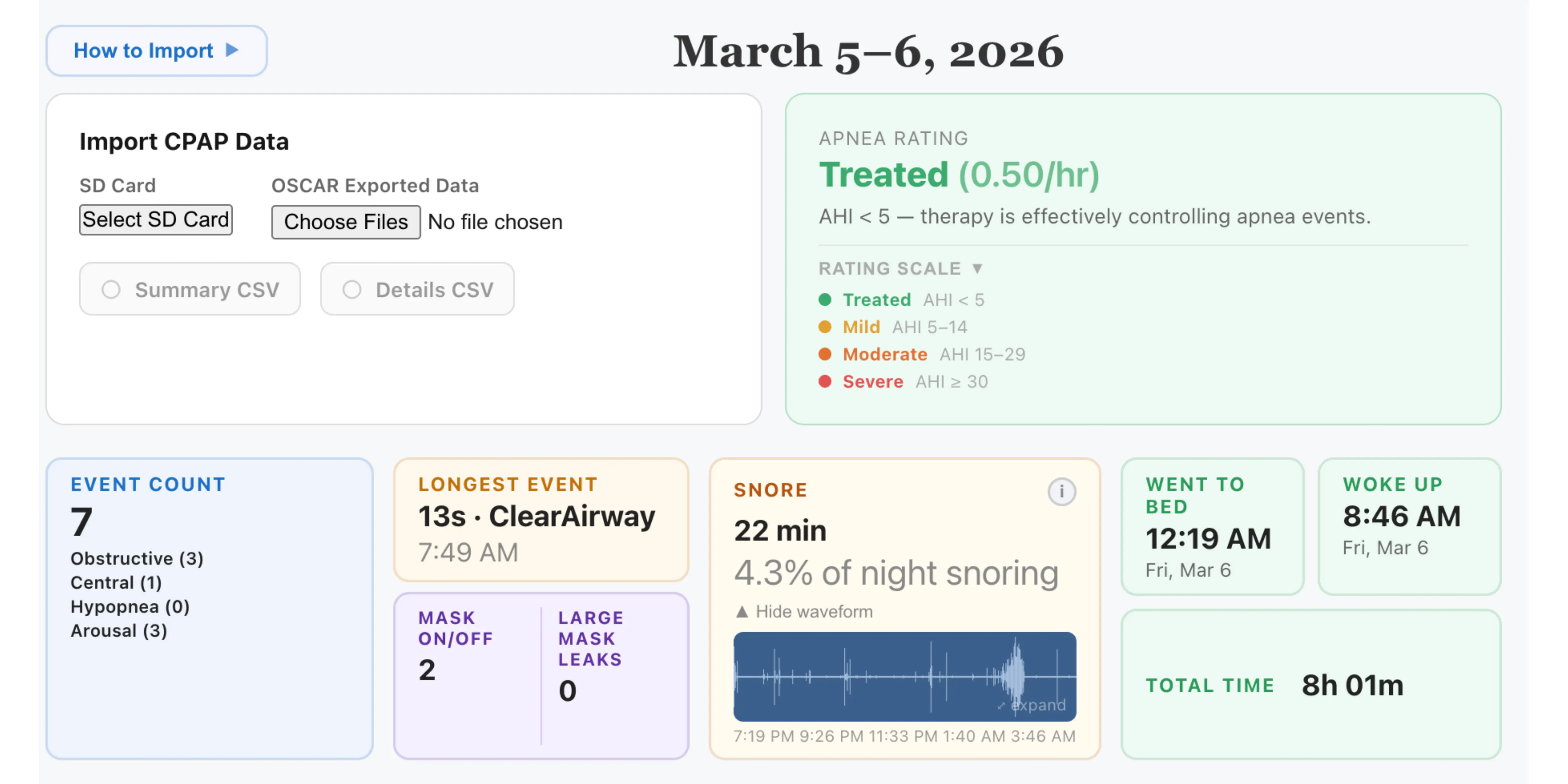
- High RERA ratio — arousals make up most of your scored events
What You Can Do About UARS
1. Import your SD card data and check the UARS Analysis on the Analytics page
2. Look at your flow limitation signal in Build a Graph — sustained flat-topped breaths are the hallmark
3. Discuss raising your minimum pressure with your sleep doctor (even 1-2 cmH2O can make a difference)
4. Consider whether EPR settings or a switch to BiPAP might help
CPAP Insights automatically detects these patterns using flow limitation clustering algorithms and flags them in your AI chat context, so you can ask Sleep Doc AI about your specific data.