


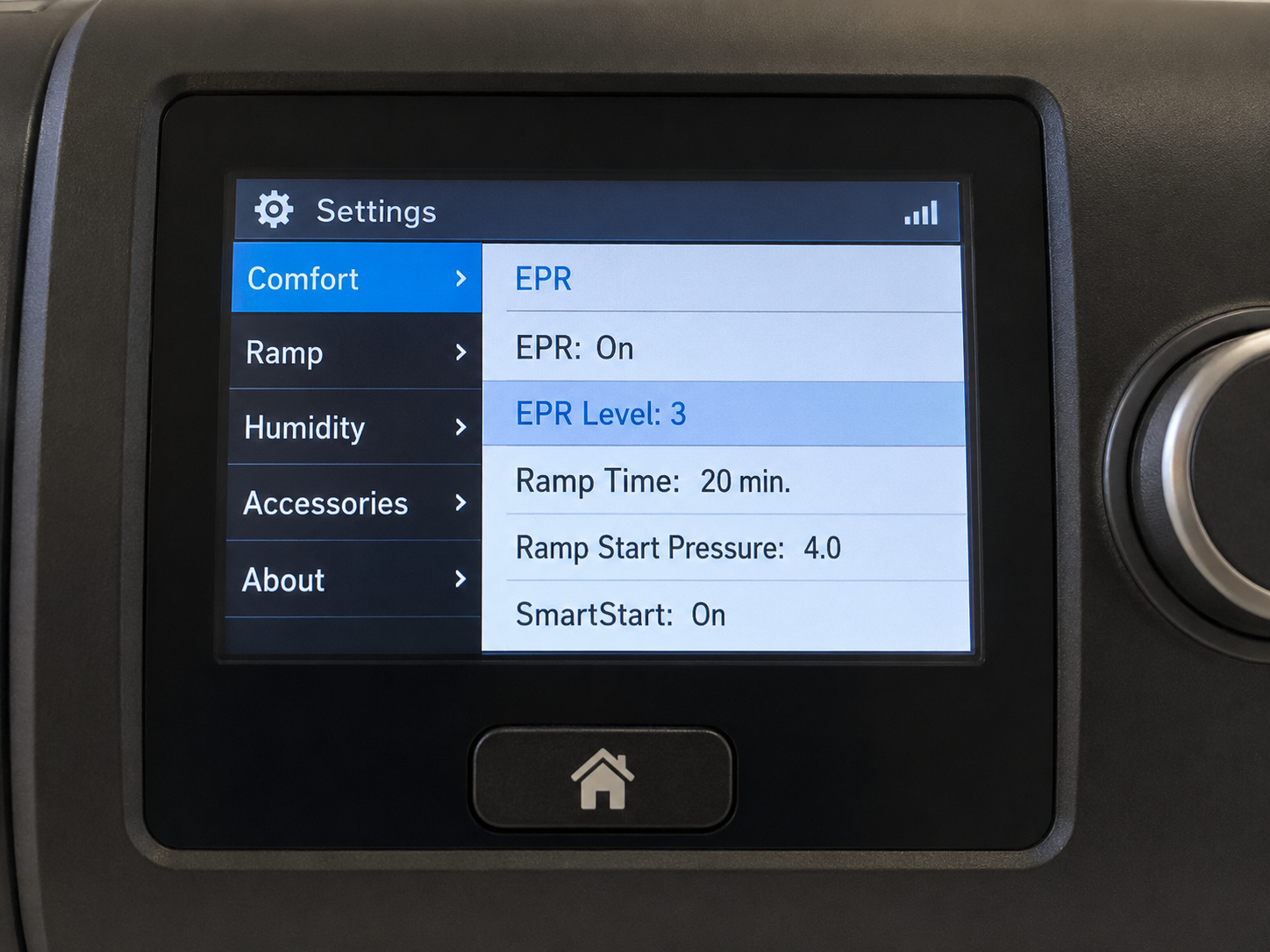
What Is EPR and How Does It Work?
EPR stands for Expiratory Pressure Relief, and it's one of the most underrated comfort features in CPAP therapy. Here's the basic idea: your machine is set to deliver a certain pressure (say, 12 cm H₂O) to keep your airway open during sleep. But exhaling against that full pressure can feel unnatural—like trying to blow out a candle while someone pushes air into your face.
EPR works by temporarily lowering the pressure during the exhale phase of your breathing cycle. When your machine detects that you're breathing out, it drops the pressure by a preset amount (usually 1–3 cm H₂O) for that breath, then returns to your full therapeutic pressure on the inhale.
ResMed offers EPR in three settings:
- EPR 1: Pressure drops 1 cm H₂O during exhale
- EPR 2: Pressure drops 2 cm H₂O during exhale
- EPR 3: Pressure drops 3 cm H₂O during exhale
Your machine detects your breathing pattern automatically, so EPR works seamlessly without you having to do anything. It's available on most ResMed devices, including AirSense and Astral models.
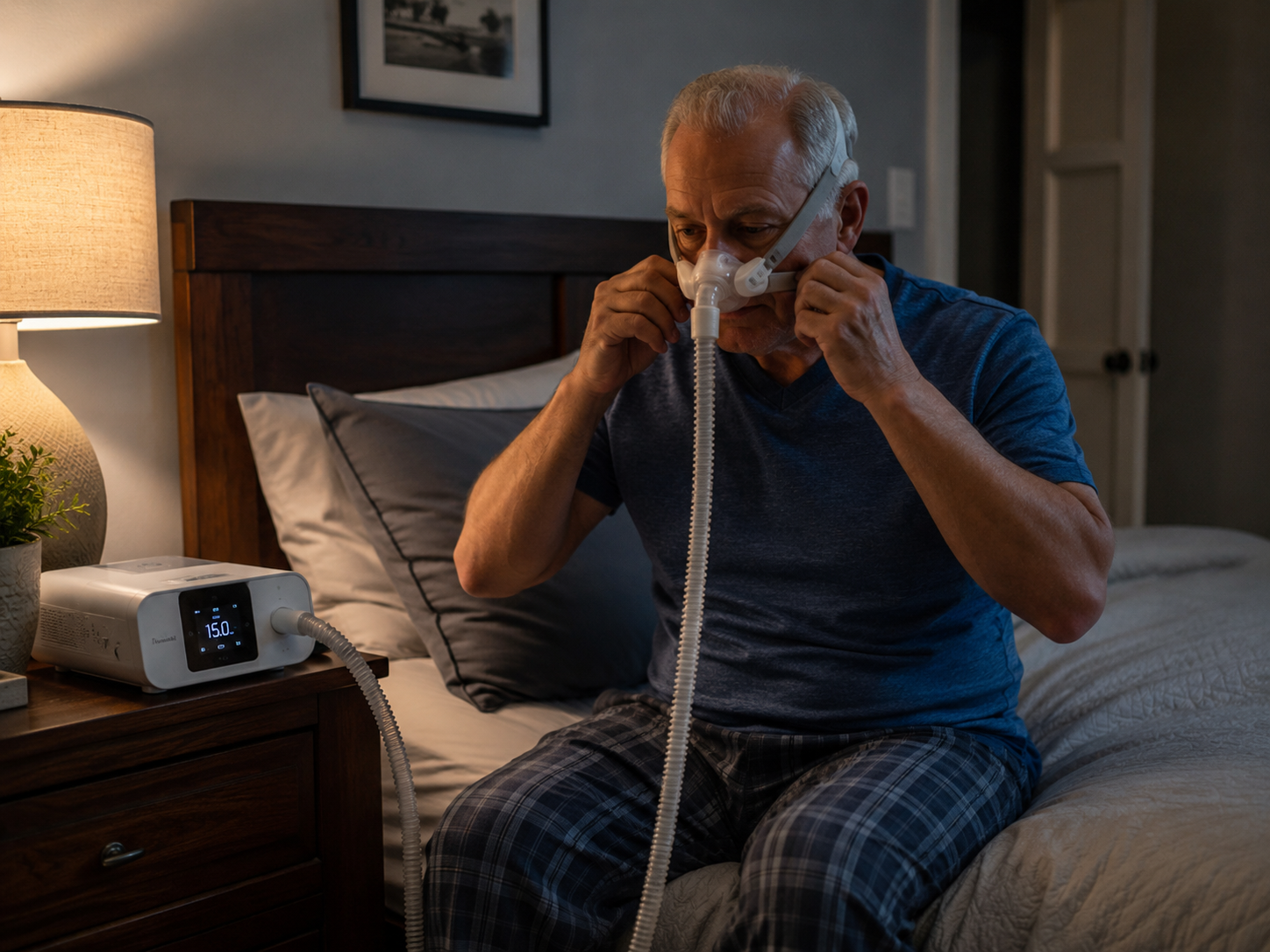
The Suffocating Feeling: Why New Users Struggle
One of the most common complaints from people new to CPAP is that feeling of suffocation or choking—like the machine is forcing air in and won't let them breathe out. This isn't imaginary. Your body evolved to breathe passively; it's used to pressure dropping naturally when you exhale. With CPAP at full pressure on both inhale and exhale, some people experience:
- A sensation of air being "stuck" in their lungs
- Difficulty initiating an exhale
- Panic or anxiety, especially lying down
- Waking up gasping or feeling claustrophobic
This is sometimes called expiratory resistance, and it's one of the top reasons people abandon therapy in the first month.
EPR addresses this directly by mimicking natural breathing physiology. By dropping pressure on exhale, you get immediate relief from that forced, suffocating sensation. Studies show that comfort features like EPR improve mask tolerance and therapy adherence—meaning you actually use your machine long enough for it to work.
Why EPR 3 Might Be Your Sweet Spot
EPR 3 drops the pressure by the maximum amount (3 cm H₂O), making it the most aggressive comfort setting. For many new users—especially those with lower prescribed pressures or high sensitivity to forced breathing—EPR 3 is transformative.
When you first set up your machine, ask your sleep doctor or technician to turn on EPR. If you're still feeling claustrophobic or suffocated, request EPR 3 as a trial setting. Many people find that EPR 3 makes CPAP feel less like a medical device and more like a normal breathing experience.
That said, there's a tradeoff: the more pressure relief you use, the less time the full therapeutic pressure spends in your airway. For most people, this isn't clinically significant—your machine still delivers enough pressure overall to prevent apneas and hypopneas. But if your AHI is borderline high or if you're using a lower prescribed pressure, EPR 3 *could* theoretically allow slightly more breathing events. You can check this yourself by importing your SD card data into CPAP Insights and building a graph to compare your AHI before and after increasing EPR.
The key is balance: use the highest EPR level that keeps you comfortable *and* your AHI controlled.
How to Adjust EPR Settings
Adjusting EPR depends on your machine type:
AirSense 10 and 11: Navigate to Settings > Comfort > EPR and choose Off, 1, 2, or 3. Most machines default to EPR Off or EPR 1, so you'll usually need to increase it yourself.
Astral: EPR is under Settings > Breathing Comfort > Expiratory Pressure Relief.
Older models (AirSense 9): EPR may be labeled slightly differently or accessed through the main menu.
If you're unsure where to find it, check your machine's quick-start guide or ask your equipment provider to walk you through it. Some clinics set EPR remotely through ResMed's *cloud platform*, so you might also ask if your machine is managed that way.
A practical tip: if you're new to CPAP and feeling suffocated, start with EPR 3 for a week. Track your comfort and any dreams or sleep quality changes. After a week, download your SD card, import it into CPAP Insights, and compare your AHI. If it's stable, you've found a good setting. If your AHI spiked significantly, try EPR 2 and monitor again.
When EPR Isn't Enough (And What to Try Next)
EPR is powerful, but it's not a cure-all. If you're still feeling claustrophobic with EPR 3, the issue might be:
- Mask fit or seal: A leaky or poorly fitting mask can cause air to rush past your face, which feels worse than steady pressure. Try adjusting the headgear or switching mask types.
- Ramp feature: Many ResMed machines have a Ramp setting that starts you at a lower pressure and gradually raises it over 20–45 minutes. This lets you fall asleep at a comfortable pressure before the full therapeutic level kicks in.
- Pressure itself: If your prescribed pressure is significantly higher than what feels natural, discuss with your sleep doctor whether the prescription is accurate or whether a sleep study revisit might help.
- Underlying anxiety: Some people with panic disorder or claustrophobia need behavioral support alongside CPAP adjustment. This is worth discussing with your doctor.
EPR 3 resolves the suffocating feeling for most people. But if it doesn't, don't suffer in silence—reach out to your sleep clinic or consider using Sleep Doc AI (available in CPAP Insights) to get feedback on your settings before your next appointment. Small adjustments often make the difference between abandoning therapy and finding real relief.