


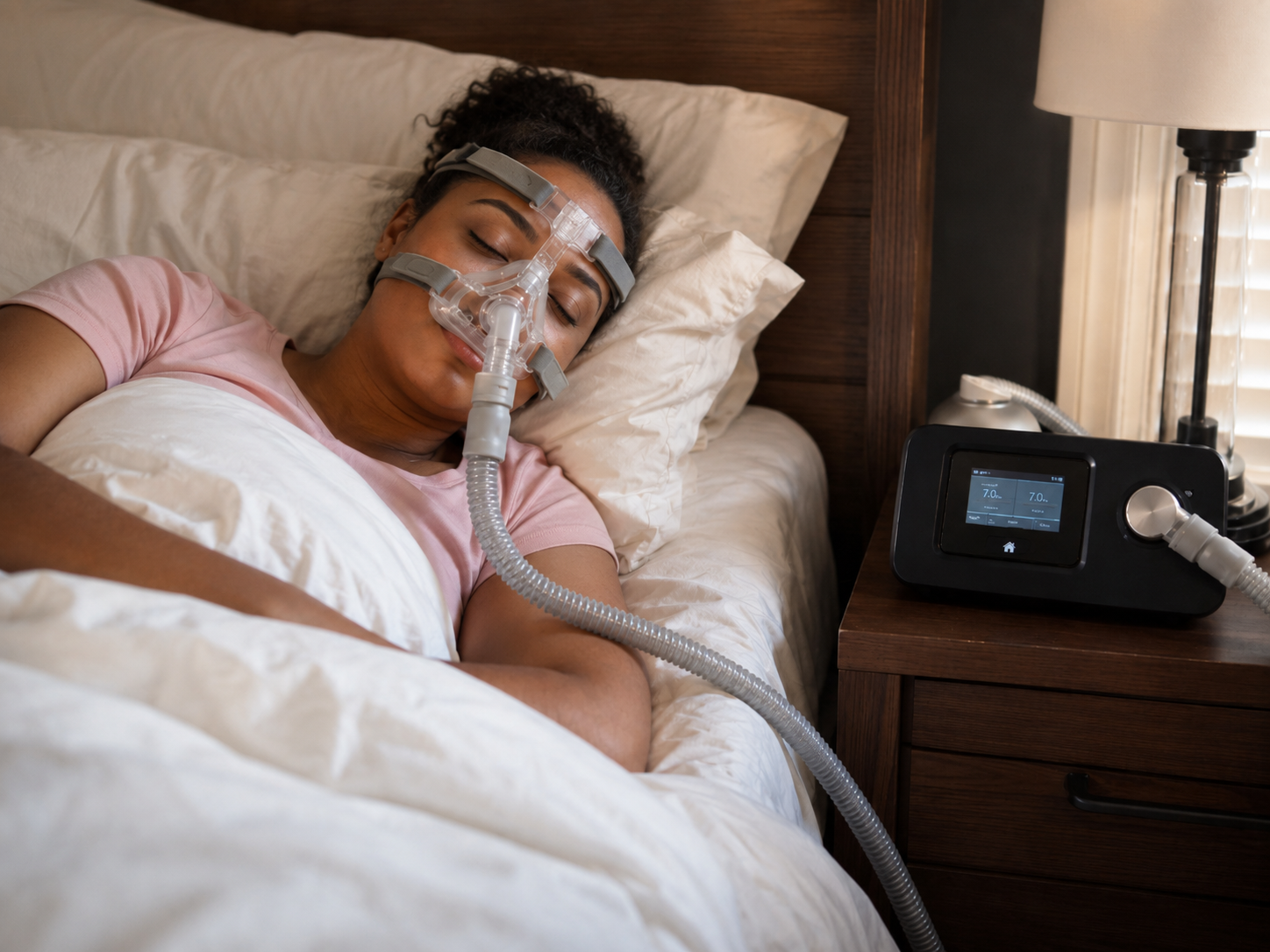
Why Sleep Position Matters for Your Mask
Your sleep position directly affects mask seal and comfort. Pressure on the mask from your pillow, head tilt, and facial contact all change how well your seal holds—and a poor seal means air leaks, which tanks your AHI numbers and reduces therapy effectiveness.
If you've imported your SD card into CPAP Insights, you might notice your AHI spikes on certain nights. Sleep position could be part of the story. Different mask styles handle positional changes differently, so matching your natural sleep position to the right mask can be the difference between nightly use and drawer-sitting frustration.
Let's walk through the main mask types and where they shine.
Nasal Pillows: Best for Side and Back Sleepers
Nasal pillows are the gold standard for positional flexibility. They sit low and minimal—just two small inserts in your nostrils, with a light headgear frame. There's almost nothing to press into a pillow.
Best for: Side sleepers and back sleepers. If you roll from side to side, pillows are forgiving. Your pillow won't crush them, and the seal usually stays intact even if your head tilts.
Watch out for: Stomach sleeping. When you're face-down, the entire mask angle changes. Nasal pillows can shift or pop out if you're a committed stomach sleeper.
Popular models: ResMed Swift FX, Philips DreamWear nose, Restech Meson (if you use ResMed—check your device compatibility).
If seal issues plague you, track them in your SD card data. Gaps in usage or spiking AHI on certain nights often correlate with position shifts.
Nasal Masks: Solid Middle Ground
Nasal masks cover your entire nose, held by a larger headgear frame. They're more robust than pillows but less invasive than full faces.
Best for: Back sleepers and side sleepers. The larger contact area means the seal is often more forgiving of minor position shifts. If you lean into your pillow, a well-fitted nasal mask handles it better than a pillow.
Watch out for: Stomach sleeping and ear/temple sensitivity. The headgear straps can dig into your temple if you sleep on your side with the pillow pushing the frame sideways. Stomach sleeping is still awkward—your face-down position compresses the mask.
Popular models: ResMed Swift, Philips DreamWear nose (full version), Fisher & Paykel Eson.
If you use CPAP Insights' Build a Graph feature and your AHI clusters on side-sleep nights, a nasal mask swap might be worth discussing with your sleep doctor.
Full-Face Masks: For Stomach Sleepers and Mouth Breathers
Full-face masks cover both nose and mouth, held by straps around the head and often the chin. They're bulkier but deliver the most stable seal across all positions.
Best for: Stomach sleepers, mouth breathers, or anyone who needs maximum stability. If you sleep face-down, a full face won't pop out—the large surface area and chin strap keep everything locked in. Also ideal if you're a mouth breather: sealed mouth means no leaked air.
Watch out for: Claustrophobia, pillow interference (the larger profile touches more of your face), and skin irritation from the chin strap. Some people find them too warm or bulky to sleep in night after night.
Popular models: ResMed AirFit F30, Philips DreamWear Full Face, Fisher & Paykel Vitera Full Face.
One hidden benefit: if your SD card data shows consistent mouth leak (detectable as unusual pressure waveforms), a full-face with mouth seal might immediately improve your numbers.
Hybrid Masks: Pillows with Headgear
Hybrid masks attempt to split the difference—nasal pillows with a more structured headgear, or minimal nose pieces with a larger frame.
Best for: Side sleepers who want pillow simplicity but need better frame support, or people transitioning between mask types. They're lighter than full-face but more stable than bare pillows.
Watch out for: They often sit in an awkward middle ground—bulkier than pure nasal pillows but less stable than true nasal masks. Stomach sleeping is still problematic.
Popular models: ResMed AirFit P10 (minimalist hybrid feel), some Dreamwear variants.
If you're new to CPAP, starting with a hybrid and tracking your comfort weekly is reasonable. You can log your impressions and compare them to your AHI and leak data imported from your SD card.
How to Choose: A Practical Workflow
Start by knowing your position. Wear a position tracker for a week—many sleep apps do this, or ask your sleep doctor if they tracked you during your diagnostic test.
Match your position to mask type:
- Stomach sleeper → full-face mask
- Side sleeper → nasal pillow or nasal mask
- Back sleeper → any mask works; start with what's most comfortable
- Mixed sleeper → nasal pillow or full-face, depending on how much you move
Test and measure. Import your SD card into CPAP Insights monthly. Use Build a Graph to overlay your AHI against dates and note your mask or position changes. If you switched masks on day 5 and your AHI improved, that's data-backed evidence.
Discuss mask fit with your sleep doctor. If leaks or discomfort persist, your technician can observe your fit on camera or suggest minor tweaks (headgear positioning, cushion size, etc.). They may also spot if a completely different mask family would suit you better.
Your sleep position isn't a limitation—it's a guide. The right mask makes CPAP adherence feel effortless.