


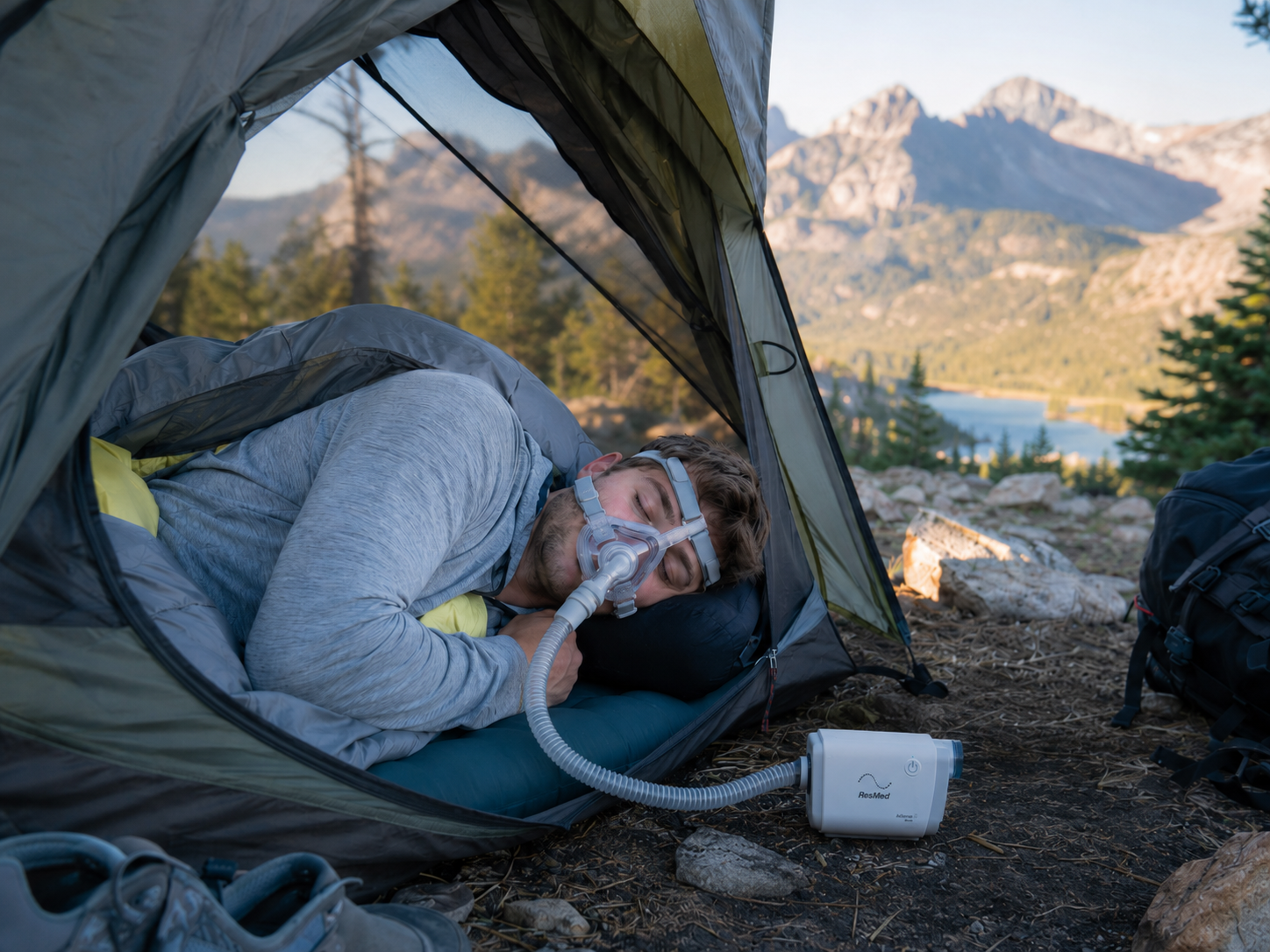
The Honest Truth About CPAP Camping
If you have moderate-to-severe sleep apnea, leaving your CPAP at home isn't a real option—even for a weekend. But camping with CPAP requires acknowledging one thing upfront: it's not the same level of freedom as non-CPAP camping. You'll need power, you'll need your equipment, and troubleshooting happens at 2 AM in the dark.
That said, thousands of CPAP users camp regularly and manage just fine. The key is planning for power before you pack your tent. Most ResMed machines draw 30–60W during use, which sounds small until you're counting battery hours. Accepting this trade-off—gear weight and dependency in exchange for sleep and health—is the first step toward making it work.
If you're a serious backcountry camper with limited options for power, you may eventually decide that a hybrid approach (switching to an oral appliance for specific trips) makes sense. But for car camping, RV trips, or cabin stays? CPAP + battery solutions are absolutely doable.
Battery Options That Actually Work
Portable power stations (500–2000Wh) are the most reliable choice. Models like the Jackery 1000, EcoFlow Delta, or Goal Zero Yeti are designed for exactly this use case. A 500Wh station will run a ResMed machine for roughly 8–12 hours depending on pressure settings and humidifier use. They're heavy (10–30 lbs) but recharge via solar panels, car chargers, or wall outlets.
Battery packs (10,000–20,000 mAh) work only for battery-powered CPAP machines like the ResMed AirMini or Philips DreamStation Go. These are smaller, lighter, and ideal for backpacking—but you need the right machine first.
Car chargers and 12V inverters are cheaper (~$50–150) but less flexible. They work great if you're sleeping in or near your vehicle every night.
Tips for battery camping:
- Start with a fully charged station
- Turn off humidifier if you're dry camping; it drains 50% more power
- Use heated tubing only if the temperature is cold enough to justify it
- Check your machine's power draw in your CPAP Insights SD card data—knowing your actual usage helps you pick the right battery size
- Bring a car charger as backup
When the CPAP Dependency Feels Too Heavy
Some people reach a point where lugging batteries and power stations contradicts why they wanted to camp in the first place. If you're considering a different approach, an oral appliance (mandibular advancement device) paired with a wearable sleep tracker is worth exploring—but with realistic expectations.
Oral appliances are effective for mild-to-moderate obstructive sleep apnea (AHI roughly 5–30). They're smaller, need no power, and give you more freedom on trips. However, they don't work for everyone: they require regular dental visits, take time to tolerate, and may cause jaw discomfort.
The wearable catch: devices like Apple Watch or Oura Ring can detect *some* indicators of apnea—elevated heart rate, oxygen dips, sleep disruption—but they are not diagnostic tools. They're useful for trending your data and flagging nights that feel worse, which you can then discuss with your sleep doctor. But they won't replace the gold standard: a CPAP machine's actual apnea count (AHI), flow limitations, and breathing patterns.
If you're considering switching to oral appliance only, talk to your sleep doctor first. You'd need a baseline to know whether the appliance is working well enough, and wearables alone can't provide that. This is where devices like CPAP Insights help: if you have a few months of SD card data showing your baseline AHI and flow limitation patterns, you and your doctor can make an informed decision about whether you're a candidate for oral appliance alone.
A Hybrid Approach: When It Makes Sense
Neither CPAP nor oral appliance alone solves every camping scenario. Some users find a hybrid strategy works best:
- CPAP for most travel: Use a portable power station for vacations, road trips, and car camping (90% of trips).
- Oral appliance for lightweight trips: Use a mandibular device (or forgo treatment briefly, with caution) on short backpacking trips or excursions where power is impossible.
- Monitor both: Keep wearable data from Oura or Apple Watch during oral-appliance-only periods. If trends show increased heart rate variability or oxygen dips, you know the appliance isn't enough and you should bring CPAP next time.
This requires acceptance of intentional trade-offs. You're not getting "full CPAP therapy" on those light-travel weeks, but you're also not abandoning therapy entirely. Discuss this with your sleep doctor to set expectations and decide if it's safe for your specific sleep apnea severity.
One more thing: track your data. If you have months of SD card data from your CPAP (viewable in CPAP Insights), you'll know your true AHI and pressure needs. That baseline makes it much easier to evaluate whether you're tolerating oral appliance therapy adequately, and whether those wearable trends actually mean something clinically.
Making the Decision: Questions to Ask Yourself
Before investing in batteries, oral appliances, or wearables, clarify what you actually need:
- How often do I camp, and for how long? One weekend per year? Monthly? Multi-week backcountry trips? Frequency matters.
- What's my AHI and apnea severity? Check your CPAP data—if it's >30 AHI or severe, CPAP is non-negotiable even while traveling. If it's mild (5–15 AHI), you have more flexibility.
- Am I willing to carry gear? A 500Wh power station weighs as much as a tent. Is that acceptable?
- How important is "real" apnea monitoring vs. trend detection? Wearables are great for trends; they're not replacements for diagnostic sleep testing.
The bottom line: CPAP camping is realistic and doable with the right battery setup. An oral appliance + wearable is a reasonable *supplementary* option for specific, shorter trips—not a substitute. And if you're considering any change to your therapy, have that conversation with your sleep doctor first, armed with your actual CPAP data so the discussion is grounded in your real numbers.